
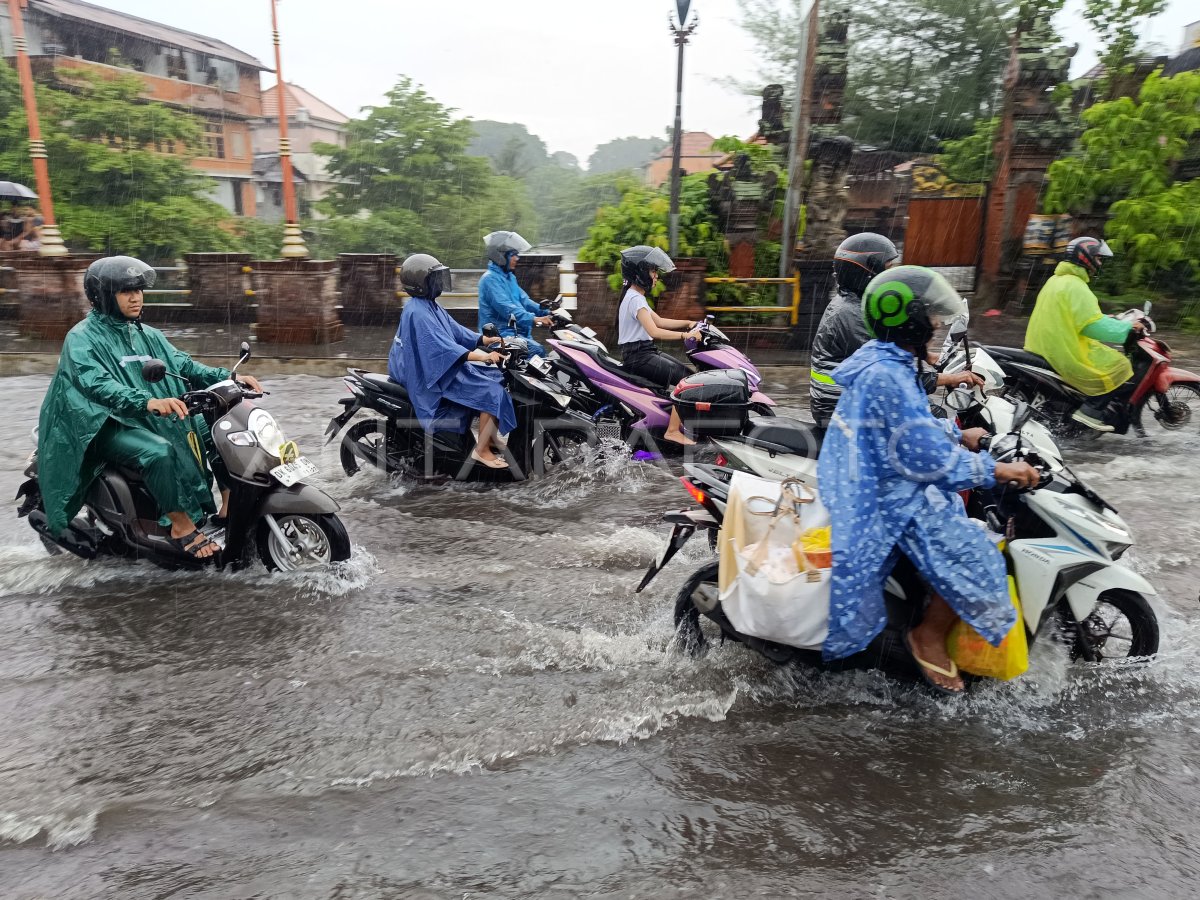
Recent unusual weather patterns in Bali have triggered various hydrometeorological disasters across several regions, including floods, damaged roads, fallen trees, and landslides. These incidents directly affect the mobility and safety of tourists visiting the island.
In response, Agung Bagus Tri Candra Arka, Chair of the Golkar Party Faction of the Bali Provincial House of Representatives, urged tourism operators to proactively inform tourists and advise them to remain cautious.
He emphasized that any disasters affecting tourists could tarnish Bali’s image as a global tourist destination, ultimately impacting both domestic and international visitor numbers.
“Providing weather updates to tourists is crucial so they can travel safely to their destinations, helping to prevent unwanted incidents during their stay in Bali,”
Agung Cok, as he is commonly known, also highlighted that Bali’s irrigation system remains suboptimal. Heavy rains often cause overflow into streets, leading to infrastructure damage and road collapses. He called for increased budget allocation for road and irrigation maintenance, as well as stronger coordination between the provincial and regional governments.
“This should be a priority for Bali’s provincial government, and local governments must also ensure regular and proper irrigation maintenance,” he added.
Tourist Arrivals Remain Stable
I Wayan Sumarajaya, Head of the Bali Provincial Tourism Office, stated that so far, the weather anomalies have not significantly affected tourist arrivals. From January to June 2025, Bali welcomed 3,300,719 international tourists, averaging 18,337 visitors per day, and 3,191,395 domestic tourists, averaging 17,729 visitors per day.
He noted that tourist visits are evenly distributed across various attractions, with many also drawn to events like the 2025 Bali Arts Festival (PKB), particularly at the Bali Cultural Park. However, Sumarajaya reminded tourism site managers to enhance safety and comfort measures to mitigate potential risks from extreme weather.
He also expressed hope that volcanic activity in East Nusa Tenggara and road damage along the Gilimanuk-Denpasar route would not disrupt tourist access, particularly for domestic travelers from Java.
Government Takes Preventive Measures
To address the impact of extreme weather on tourism, the Bali Provincial Government has taken several precautionary steps. The Tourism Office has instructed tourism businesses to implement extra safety measures—such as installing warning signs, increasing site supervision, and clearly marking restricted areas.
“At tourist sites, add safety measures, increase monitoring, and install warning signs to indicate restricted or dangerous areas,” said Sumarajaya.
These directives were also sent to regency and city officials, urging them to take disaster risk mitigation actions, especially in beach and mountain tourism areas. Additionally, the government is preparing safe and comfortable tourist attractions that remain accessible even during extreme weather.
“Almost all tourist destinations must be ready. Of course, beaches and mountains are vulnerable, but flooding can also affect roads in other areas,” he explained as reported by BaliPost.
Sumarajaya expressed relief that the current conditions have not disrupted tourist visits, especially as international arrivals remain high, averaging over 17,000 per day. Recognizing that Bali’s tourism heavily depends on nature and culture, he acknowledged that natural events such as repeated eruptions from Mount Lewotobi—can impact air travel and tourism.
“We hope that during this high season, including school holidays and international tourism peaks, natural conditions won’t negatively affect tourist visits,” he said.
To support safe tourism, hotels in Bali are also beginning to receive disaster-preparedness certification from the provincial government. These certifications aim to promote quality tourism and provide tourists with secure accommodation options.
Sources: AntaraNews, BaliPost
Feat Image: AntaraNews/Nyoman Hendra Wibowo