
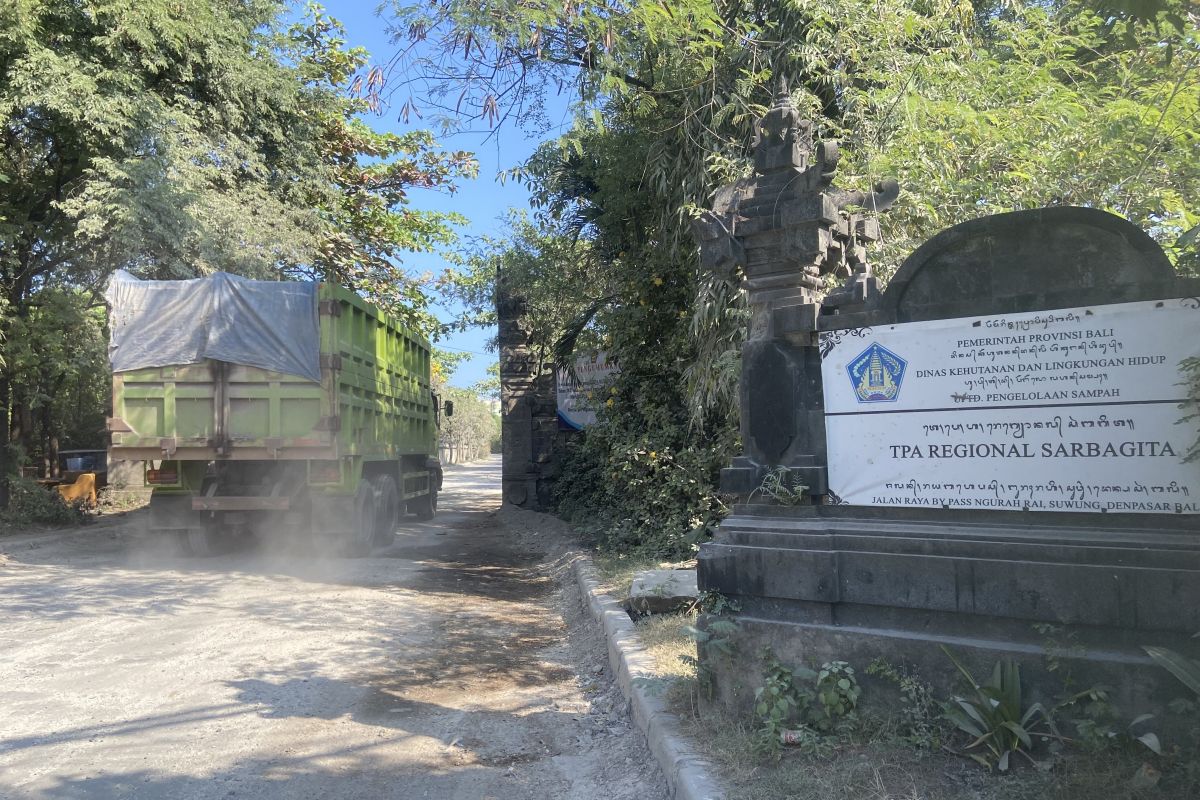
government has confirmed that operations at the Suwung Final Disposal Site in Bali will be terminated starting March 1, 2026, as part of efforts to end the practice of open dumping.
The closure is intended to shift waste management away from reliance on landfills toward handling waste directly at its source.
Minister of Environment/Head of the Environmental Control Agency Hanif Faisol Nurofiq stressed that Bali’s waste problem has gone beyond an environmental issue and has become a threat to public health and the sustainability of tourism. Therefore, regional governments are urged to take firm and strategic action in accordance with the law.
According to Republik, “Waste management is not merely an environmental issue, but a serious challenge to public health. I ask all regional leaders to have the courage to make strategic decisions and a strong commitment to end open dumping practices as mandated by law. The closure of TPA Suwung is a turning point for Bali,” Hanif said.
During a coordination meeting at the Bali Governor’s Office on Monday (December 29, 2025), Hanif instructed the acceleration of readiness at the Landih landfill in Bangli Regency as a temporary diversion site for waste from Denpasar City and Badung Regency. The diversion will be implemented while awaiting the completion of Bali’s Waste-to-Energy (WtE) facility.
He emphasized that only residual waste may be sent to TPA Landih. According to Hanif, primary waste management must be completed upstream through sorting and waste reduction by local governments, area managers, and active community involvement. This obligation also applies to business operators and commercial area managers.
The urgency to shift toward upstream-based waste management is underscored by the fact that national waste handling performance remains at around 26 percent. This condition continues to place environmental pressure on landfills and has triggered waste crises in various regions.
Hanif also reminded that the construction and development of TPA Landih must fulfill all environmental requirements to prevent new problems from emerging. As the environmental approval for the Bangli landfill has not yet been issued, he requested the Bali Provincial Government to immediately complete all licensing aspects under its authority.
According to Kompas.com, “I remind you that technical responsibility lies with area managers, namely regents and mayors, from residential waste to market waste. Without serious upstream handling, the impacts will be directly felt in environmental quality and public health,” Hanif said.
Optimism, according to Hanif, comes from community-based waste management practices such as the TPS3R Sapu Jagat in Gulingan Village, Badung Regency. This model is considered effective in reducing landfill burdens through recycling and composting integrated with environmental education.
Previously, the Ministry of Environment also highlighted the waste management crisis in South Tangerang City, which generates around 1,200 tons of waste per day, while the Cipeucang landfill has been closed. The central government, together with the South Tangerang City administration, has socialized Ministerial Decree of Environment/Head of BPLH No. 2648 of 2025 to encourage changes in waste governance in commercial and industrial areas.
South Tangerang City Regional Secretary Bambang Noertjahjo said disruptions at the downstream level directly affect city aesthetics and environmental health.
“These downstream obstacles have directly affected aesthetics and environmental health in many parts of the city, making intervention at the source level non-negotiable,” he said.
Director of Waste Reduction and Circular Economy Development at the Ministry of Environment/BPLH Agus Rusly emphasized that Law No. 18 of 2008 prohibits area managers from relinquishing responsibility for waste management to local governments. Waste, he said, must be managed as part of a circular economy system from the business planning stage.
Meanwhile, Environmental Impact Controller (First Expert Level) at the Ministry of Environment/BPLH Ardoni Eka Putra added that waste reduction must be integrated into environmental documents such as AMDAL and UKL-UPL. This ensures waste management becomes a core part of area operations, rather than merely an administrative obligation.
The Bali Provincial Government is currently preparing a final processing site in Bangli Regency to temporarily accommodate residual waste from Denpasar City and Badung Regency. This step is taken to anticipate waste handling during the transition period following the closure of TPA Suwung, which will be developed into a waste-to-energy facility.
During a meeting with Minister Hanif Faisol Nurofiq at the Wiswa Sabha Madya Room, Bali Governor’s Office, Denpasar, on Monday (December 29, 2025), Bali Governor Wayan Koster emphasized that the closure of TPA Suwung on March 1, 2026, has been decided by the Ministry of Environment and cannot be postponed. The meeting was attended by ministry deputies, Denpasar Mayor I Gusti Ngurah Jaya Negara, Badung Regent I Wayan Adi Arnawa, and Bangli Regent Sang Nyoman Sedana Arta.
Following the decision, local governments were instructed to prepare concrete steps within the next two months to ensure waste management continues, particularly in Denpasar City and Badung Regency.
“The first step that will be taken is optimizing upstream waste management by the Denpasar City Government and the Badung Regency Government,” Koster said in an official statement received by Kompas.com on Thursday (January 1, 2025).
Optimization will be carried out through the use of modern teba, Reduce-Reuse-Recycle waste processing facilities (TPS3R), and Integrated Waste Processing Facilities (TPST).
“These efforts are expected to optimize upstream waste handling, while the landfill in Bangli will only be used as a temporary alternative during the construction of the WtE facility,” Koster explained.
He added that based on regional regulations, the landfill located in Landih Village does not have regional landfill status. Nevertheless, there are provisions allowing Bangli Regency to cooperate with other regions, namely Denpasar City and Badung Regency.
During the meeting, Minister Hanif said he had received detailed explanations from the Bali Governor, Denpasar Mayor, and the Badung Regent regarding the planned transformation of waste governance in Bali.
“We held a meeting with the Governor, the Mayor of Denpasar, and the Regents of Badung and Bangli to address the implementation of the transformation of TPA Suwung into a WtE facility, which is estimated to take around two years,” he said.
Hanif stressed that waste management in Bali must not be handled half-heartedly, considering Bali’s status as a world tourism destination.
He acknowledged that using the Bangli landfill would have consequences and therefore encouraged prioritizing upstream waste management during the transition period to minimize waste shipments to Bangli.
According to him, Bali will have a very strong foundation as a tourism destination if it succeeds in building a new culture of waste management.
“We have seen many best practices. This is what we must accelerate, while we look for alternatives for residual waste that cannot be handled,” Hanif said.
He added that the closure of TPA Suwung does not indicate government negligence in addressing waste issues.
“Waste management must be carried out very carefully. One alternative is revitalizing the landfill in Bangli Regency. We only have around two months to upgrade its facilities so it can be used temporarily while waiting for the WtE project to be completed,” Hanif emphasized.
Support from local governments was also expressed during the meeting. Denpasar Mayor I Gusti Ngurah Jaya Negara explained that his administration continues to expand facilities such as vertical teba, composting tubes, and waste banks. The Denpasar City Government is encouraging the development of TPS3R at the village level to manage waste in the middle zone, while downstream waste is handled through TPST.
“From the various efforts carried out by the Denpasar City Government, around 57 percent of waste in Denpasar still requires further handling,” Jaya Negara said.
Meanwhile, Badung Regent I Wayan Adi Arnawa highlighted the growing public awareness in Badung regarding upstream waste management. Bangli Regent Sang Nyoman Sedana Arta said his administration still needs to carefully examine plans to use the Bangli landfill as a temporary disposal site during the transition period, as he had only recently received the briefing from the Minister of Environment.
Nevertheless, Sedana welcomed the steps taken by the Denpasar City Government and the Badung Regency Government to optimize waste management ahead of the closure of TPA Suwung.
“Bali, as a tourism-based region, needs short-term alternative solutions. Hopefully, not much waste will need to be transported to Bangli,” he said. Sedana added that the Bangli Regency Government will also conduct outreach to various segments of the community to anticipate potential issues in the future.