
The global wellness industry has evolved far beyond a lifestyle trend into a major economic force. According to the Global Wellness Economy Monitor 2025 by the Global Wellness Institute (GWI), the sector has reached a record USD 6.8 trillion, marking 35% growth since 2019. The industry is expected to accelerate further and approach USD 10 trillion by the end of the decade, underscoring its growing global influence.
This expansion places wellness well ahead of several major industries. By comparison, the global sports industry is valued at around USD 2.7 trillion, tourism at USD 5 trillion, and information technology at USD 5.3 trillion. More notably, global wellness spending now accounts for nearly 60% of total healthcare and medical expenditure worldwide, signaling a decisive shift toward prevention and holistic well-being.
The surge is driven by changing consumer priorities. GWI Senior Researcher Katherine Johnston notes that consumers are increasingly focused on preventive health, mental well-being, social connection, and the impact of their living environments on long-term quality of life. With the post-pandemic recovery phase behind it, the global market has entered an acceleration phase centered on longevity, personalization, and optimized health.
Wellness real estate has emerged as the fastest-growing segment, expanding by 19.5% annually, as people seek living spaces designed to actively support physical and mental wellness. Mental health services follow closely, growing 12.4% per year, reflecting emotional well-being as a non-negotiable priority, particularly for younger generations.
Indonesia’s Strategic Advantage and Outlook
Against this global backdrop, Indonesia occupies a uniquely strategic position. As the world’s largest archipelagic nation and home to one of the largest tropical forest areas globally, its wellness economy is deeply rooted in nature, biodiversity, and centuries-old healing traditions.
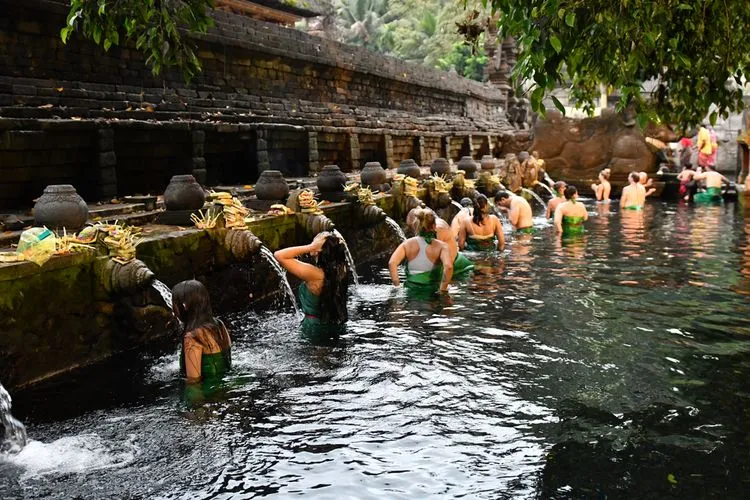
Local wisdom forms the backbone of Indonesia’s wellness identity, enriched by historical influences from Indian, Chinese, and Arab traditions. Destinations such as Solo, known for herbal medicine and aromatherapy, Yogyakarta, with its palace rituals and rural retreats, and Bali, internationally recognized for eco-conscious luxury wellness experiences, form the pillars of Indonesia’s global appeal.
Indonesia’s wellness market is currently valued at approximately USD 36.4 billion, ranking 7th in the Asia-Pacific region and 19th globally.
Looking ahead, Indonesia’s wellness industry continues to show strong growth potential. Government targets for international arrivals align with a broader push toward quality tourism, emphasizing depth of experience over volume. Globally, wellness tourism is forecast to grow 9.1% annually through 2029, and Indonesia is well positioned to capture this momentum.
Traditional and complementary medicine is expected to be a key driver, valued at around USD 5.6 billion, expanding beyond herbal remedies to include longevity-focused therapies such as red-light therapy and cryotherapy. Wellness tourism alone contributes an estimated USD 1.7 billion, offering mindful, place-based journeys that integrate inner well-being with Indonesia’s natural landscapes.
By combining geodiversity, biodiversity, and cultural depth, Indonesia—anchored by Bali’s global reputation—continues to gain ground as a leading wellness destination in an increasingly health-conscious world.
Source: Kompas, Global Wellness Institute
Special Photo Credit: via app.pandooin.com