
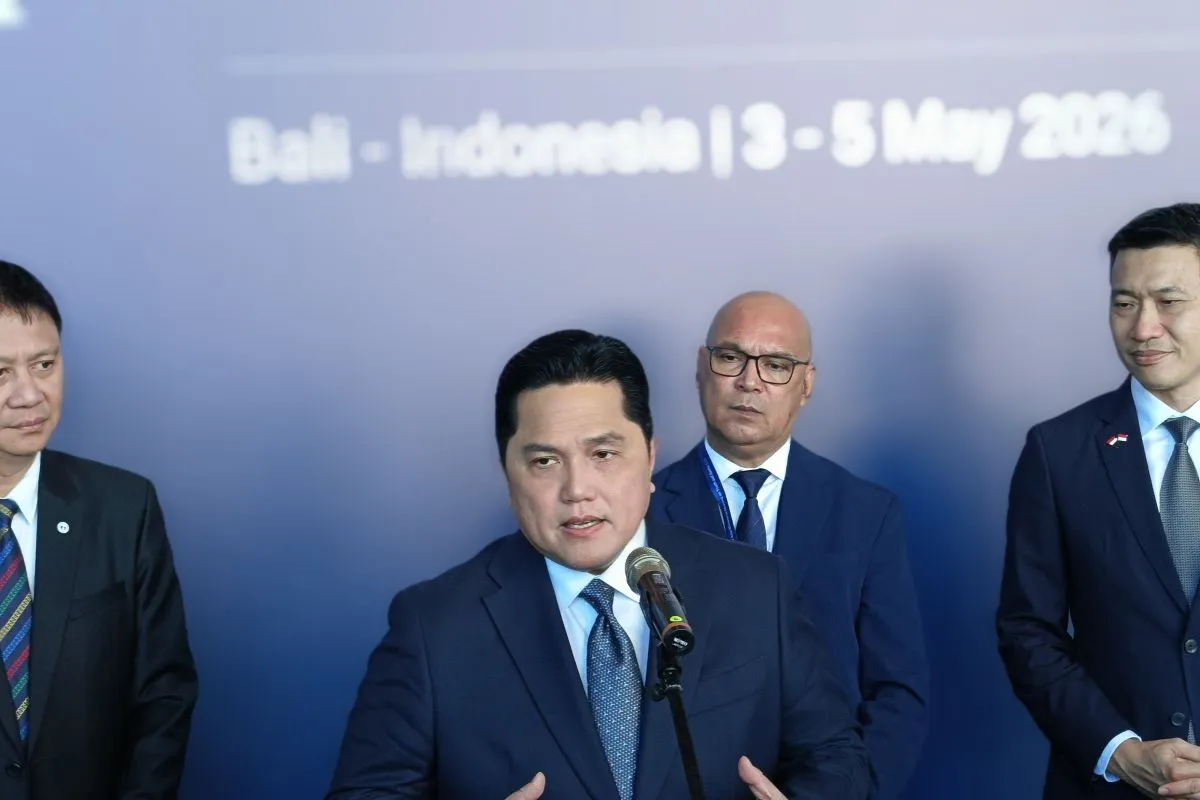
Bali, Indonesia – Sport ministers from all over Southeast Asia got together in Bali on May 4, 2026, for a landmark regional meeting to reshape Southeast Asian Games (SEA Games) regulations and launch new cross-border sports tourism initiatives across the region.
Indonesian Youth and Sports Minister Erick Tohir chaired the Southeast Asia Ministerial Meeting of Youth and Sports at The Meru in Sanur. Their discussions primarily focused on developing more consistent and inclusive regulations for the region’s premier multi-sport event, the SEA Games.
A Push for Stable SEA Games Events
A major result from the Bali sports summit was a unified agreement to work more closely with the Southeast Asian Games Federation (SEAGF).
Regional ministers criticized the current SEA Games format for its frequent rotation of sports disciplines, noting that such instability prevents elite athletes from participating.
“Don’t let it happen again that a gymnastics champion from the Philippines couldn’t compete,’’ said Indonesian Minister Erick Thohir, highlighting a previous issue.
The main goal is to create a fixed core of sports featured in every SEA Games edition, enabling Olympic-level athletes to continue participating at the regional level.
Ministers agreed that the SEA Games should shift focus away from differences between host nations and instead serve as a unified platform promoting Southeast Asia globally.
They also discussed the Philippines’ expressing interest in hosting a future edition, likely the 2031 SEA Games.
Under the proposed framework, each country would be encouraged to keep its signature sports—such as Indonesia in badminton and weightlifting, Thailand in taekwondo, Vietnam in shooting, the Philippines in gymnastics, and Singapore in swimming.
Eyeing a Regional Marathon Circuit
Beyond the SEA Games, the ministers explored launching a joint marathon or cycling series, modeled after famous events like the London or New York Marathons.
The goal is to link major cities across Southeast Asia, including Singapore, Timor-Leste, Indonesia, the Philippines, and Malaysia.
“Why doesn’t Southeast Asia have something of its own?” Thohir questioned, pointing out the region’s population of 650 million and its robust economic expansion, which positions sports tourism as a vital industry for the future.
Discussions also focused on youth development, with participants exchanging effective strategies on pressing topics such as artificial intelligence, mental well-being, and job opportunities.
This inaugural meeting was presented as an opportunity for mutual learning rather than rivalry, as ministers committed to delivering practical solutions to benefit young people throughout their countries.
Source: Detik.com
Feat Image: ANTARA News