
The Bali Provincial Government is preparing to establish integrated service units and 24-hour tourist assistance posts at key destinations across the island. The initiative aims to strengthen emergency response, enhance tourist safety, and support Bali’s tourism vision of delivering high-quality and sustainable travel experiences.
“These service posts must be connected to health services, disaster response agencies, police, municipal officers, Basarnas, and tourism authorities. Every destination must have an emergency service that can be reached quickly through a dedicated number,” said Bali Governor Wayan Koster, as quoted by Antara.
He explained that the posts will be supported by a dedicated digital application, enabling all systems to run in an integrated manner.
“We are also preparing a digital platform to make the system work seamlessly,” Koster added during a meeting on Tourist and Foreign National Protection and Regulation held in Denpasar on Friday.
Koster emphasized the importance of integrated management in safeguarding tourists. Risks faced by visitors in Bali are diverse — ranging from security incidents and traffic accidents to health emergencies and natural disasters.
“We must have a system that guarantees the security and comfort of tourists during their stay in Bali — whether they are at hotels, beaches, mountains, rivers, or traveling between destinations. Everything must be managed in an integrated way,” he said.
This initiative is part of the province’s broader push to develop professional, technology-driven tourism management. By strengthening visitor protection systems, Bali hopes to reinforce its reputation as a trusted and world-class tourism destination.
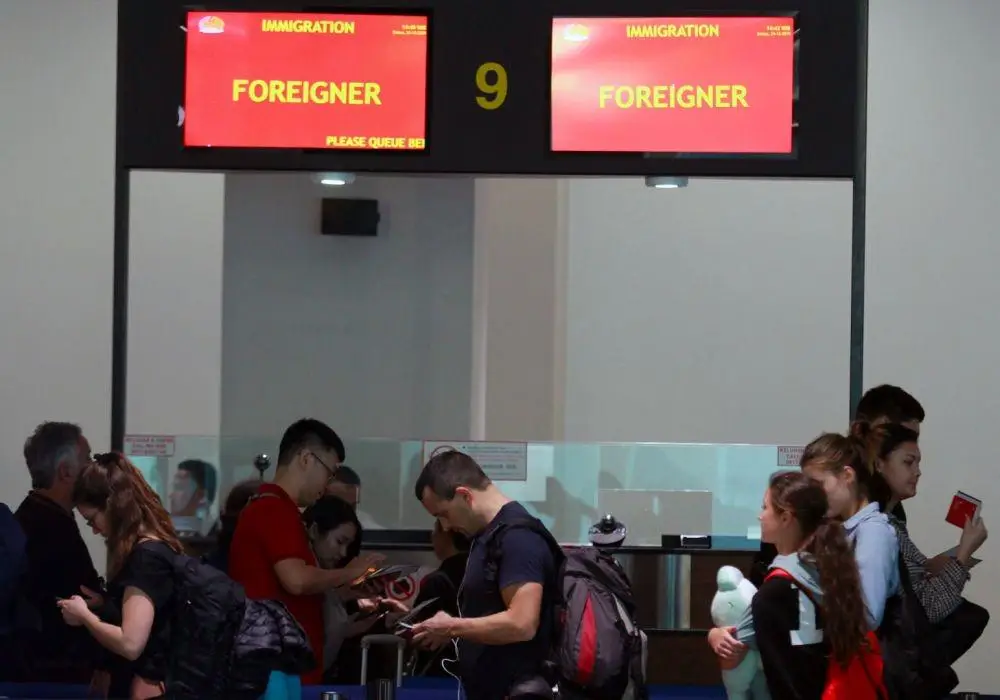
According to the Bali Tourism Agency, from January to September 2025, international tourist arrivals reached 5.6 million, dominated by visitors from Australia, China, India, and the United Kingdom.
Head of the Tourism Office I Wayan Sumarjaya noted that while efforts to protect foreign visitors have been balanced with law enforcement, several challenges remain. These include a lack of security staff at tourism businesses, limited emergency health facilities, and insufficient cooperation with insurance providers.
To address these gaps, the provincial government plans to enhance partnerships with health facilities and insurance companies, while expanding the number of 24-hour tourist service posts in major attractions.
“In the future, all destinations will also be equipped with real-time weather information systems in cooperation with BMKG, covering 81 tourist sites,” Sumarjaya explained, as quoted by BaliBerkarya.
Koster reiterated this commitment during a separate meeting at Gedung Kertha Sabha, Denpasar, on October 9. He stressed that protecting tourists must be handled through an integrated management approach, involving health services, disaster response units, law enforcement, and tourism stakeholders.
“If this system runs well, Bali will gain even more trust globally. We’re not just selling nature — we’re showcasing professional governance and skilled human resources,” he stated.
Official data shows that in 2025, immigration authorities carried out 1,185 enforcement actions, including 406 deportations, while 144 cases involved foreign nationals as victims, mostly due to accidents and acts of violence.
The policy discussions were attended by local government agencies, law enforcement, disaster management bodies, immigration officials, and tourism stakeholders. The outcomes will serve as the basis for drafting a new Regional Regulation on Quality Tourism Governance in Bali.
Source: Antara, BaliBerkarya
Photo Credit: ANTARA FOTO/Muhammad Iqbal