
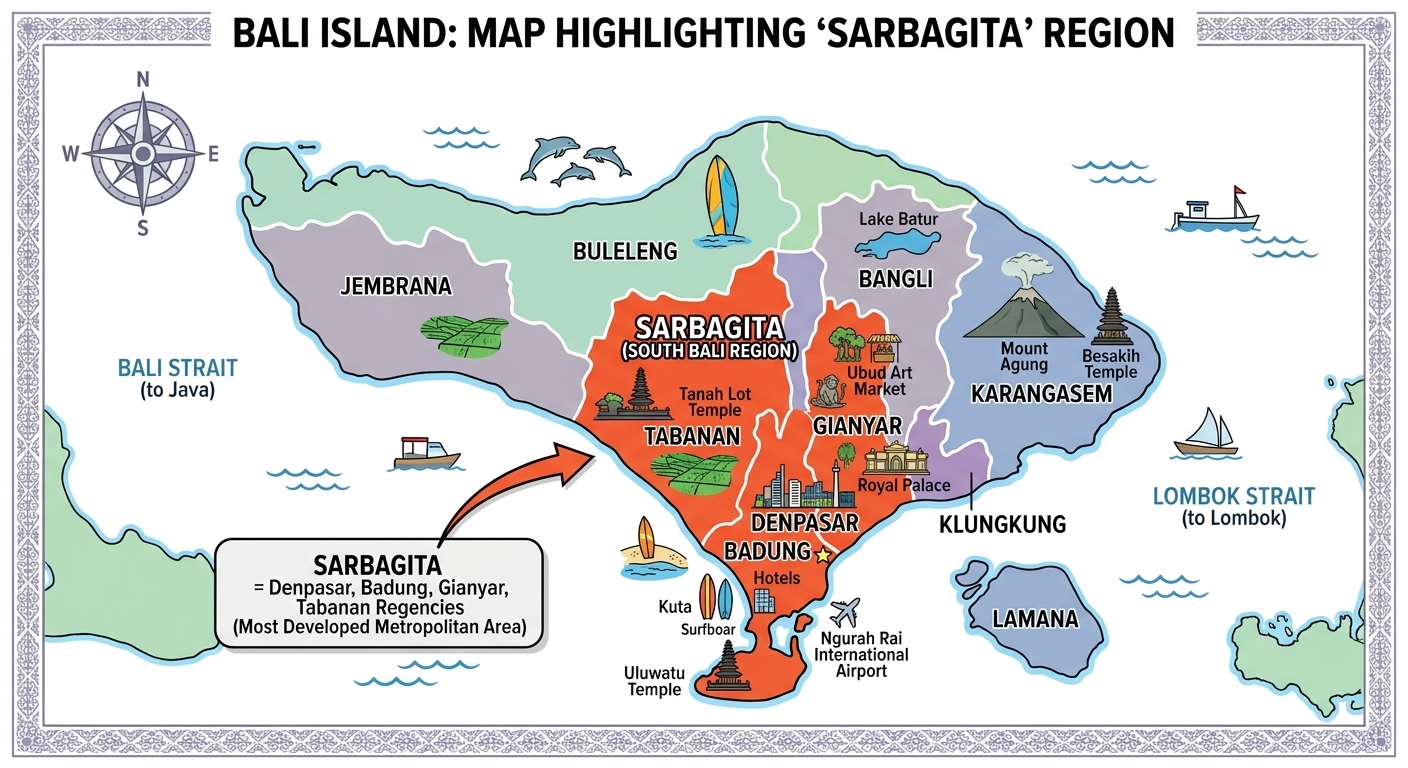
More than 90% of investors in Bali still choose to put their money into the island’s south, highlighting an investment gap that continues to shape Bali’s economic growth.
While South Bali remains the hub for investment and tourism, the north plays a smaller role in the regional economy.
Achris Sarwani, Head of Bank Indonesia’s Bali Representative Office, said South Bali accounts for around 58% of the island’s economic growth. North Bali’s contribution remains below that level.
Achris said the uneven spread of investment is one of the challenges to bringing more balanced growth across Bali. The north, he added, has considerable economic potential that could help create new sources of growth.
“So we can’t rely only on tourism, which has long been concentrated in South Bali. North Bali’s economic potential also needs support so it can become a new source of growth,” Achris said at the Buleleng regent’s official residence on Thursday, November 5, 2026.
One way to get North Bali’s economy moving, he said, is to make better use of the resources it already has. Developing local processing industries could be a starting point, allowing the region to build momentum without waiting for major investment.
He pointed to plantation crops such as cloves, which could be turned into processed products. By involving local businesses, these crops could generate more value for communities rather than simply being sold as raw materials.
Meanwhile, Buleleng’s economic growth continues to trail Bali’s average. One reason is that it has fewer drivers of growth than the south, where investment and tourism have long been concentrated.
Developing North Bali’s strongest industries therefore needs to go hand in hand with better transport connections and an easier investment process. Together, these efforts could open up business opportunities, expand industrial activity and reduce Bali’s dependence on the south for economic growth.
Sources: Detik