
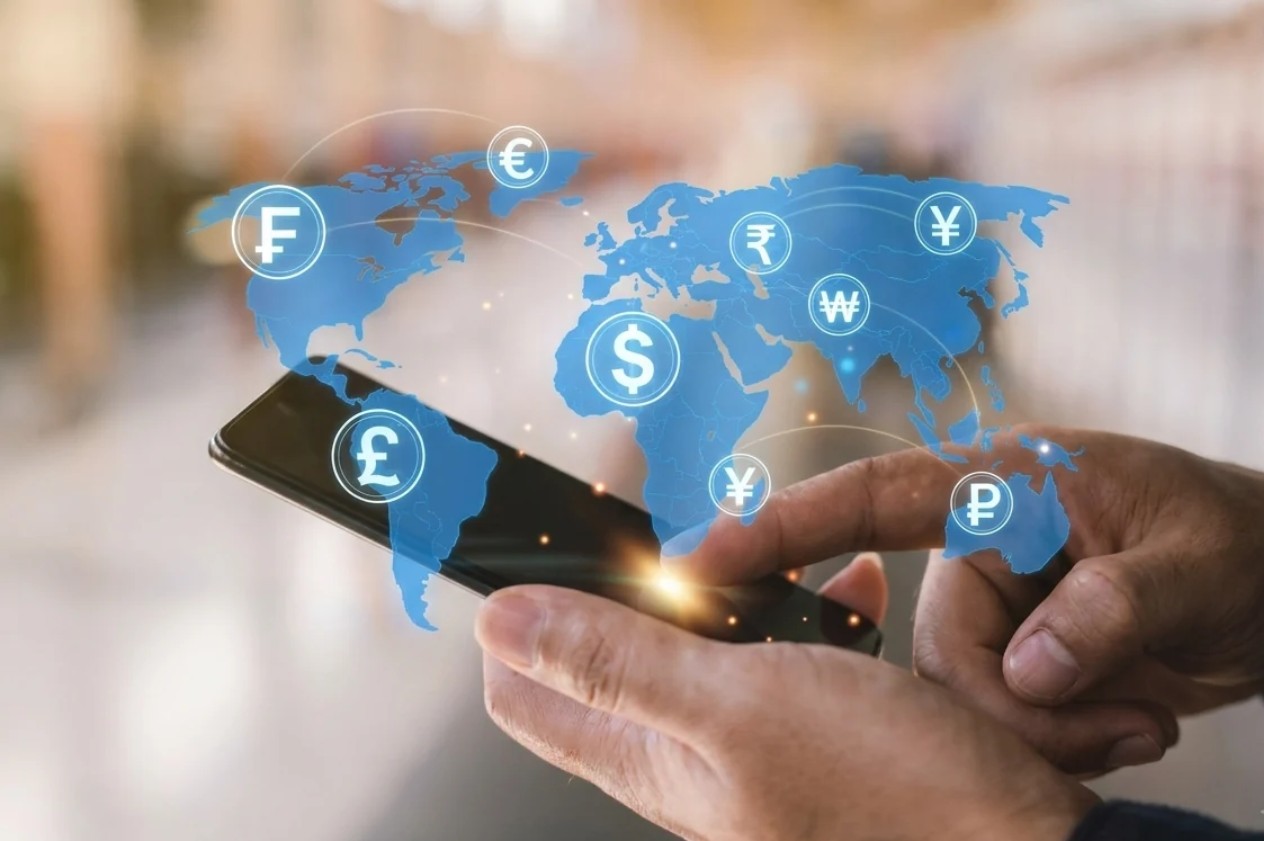
If you speak to expats in places like Canggu and Ubud about their money transfers to Indonesia, you will hear a very similar story.
The currency exchange was fair, the fee was not outrageous, and they thought the money would reach their bank account in a reasonable amount of time, but what actually entered their account was nowhere near what they thought they should be seeing. Very common experience. Thankfully avoidable.
Cash Transfers to Indonesia
Whether you’re moving, renting an apartment, purchasing a legal service, or even doing any kind of business, cash transfers to Indonesia are necessary.
As the number of global expats increases, the remittance market continues to thrive in Indonesia. This provides us with plenty of options and thus complicates our choice even further.
Begin with the True Cost of Your Overseas Money Transfers
The majority of people will only assess transfer costs. However, skilled foreign workers will compare results. The only number that matters is the number of problems that end up in the receiver’s account; hence, always request a written quote from all companies showing their rates and all associated fees, along with the final IDR amount.
A “no fee” proposal should be revisited. Companies that claim no fees are usually making money out of the exchange rate, which is harder to detect. To put it differently, a transaction that has a low fee but a poor rate may be more expensive than the one which has a visible fee but a good rate.
Check IDR Rate Against Mid-Market Rates
The mid-market rates are an average between the buying and selling rates banks charge for currency pairs. It can easily be researched on any recognized financial site and is the best rate you can use for comparison.
Check how it compares with your provider’s rate. The difference between the two is your provider’s mark-up, which can be significant over the course of many transactions throughout the year.
Timing also has its role to play. The Indonesian Rupiah fluctuates frequently, and at times a huge jump is seen. If you need to send money because of a property purchase, inquire with the service provider whether they have a locking option, target rate alert, or forward contract.
As far as living expenses are concerned, it’s best to follow a sometimes rigid and consistent payment schedule rather than trying to time the market.
Understand Transfer Charges and Underlying Costs
Transactions involving cross-border payments often incur several fees at multiple points. Hence, you should find out about:
▪︎ A charge by the service provider, which could simply be a fee, a per-symbol fee, or a certain percentage of the amount.
▪︎ Deductions made by intermediary banks, which usually happen with SWIFT wire transfers, and these often keep deducting throughout the whole process.
▪︎ Deductions made by the receiving bank, which might apply charges when receiving an incoming transfer from abroad.
▪︎ Exchange rates, especially in cases where there are two conversions before reaching the destination bank.
If the money needs to be sent in full, ask the provider to confirm that the amount received matches the billed amount. If less arrives, there will be awkward discussions with the landlords or developers.
Learn About Transfer Limits Prior to their Application
Limits set up by banks and service providers will be created depending on the transaction amount, as well as daily and monthly limits. Factors influencing the limits are the account verification level and transaction purpose.
Lower verification results in a lower level of transfers. digital remittance market in the case of large transactions, banks and providers perform additional due diligence procedures.
They can ask you about the source of The money and the destination. Make sure to have supporting documents for the transaction. Making several transactions below the limit can be noticed and might cause additional delays.
Compare Channels at a Glance
| Channel | Cost Profile | Speed | Works Best For |
| Bank Wire (SWIFT) | Higher; intermediary fees possible | Several business days | Large, well-documented payments |
| Online Remittance Platform | Often lower; clearer pricing | Hours to a few days | Monthly living costs, mid-sized transfers |
| Multi-Currency Account | Competitive conversion | Quick inside the platform | Frequent payments in more than one currency |
| Money Transfer Operator | Varies by route | Often same day | Smaller, urgent payments |
Start with this: Due to the changing costs and speeds depending on the service provider and route, always obtain an online quote.
Allow Sufficient Time for The Process
An electronic transfer may be completed within hours, while a bank transfer may take days, particularly if there is interference from other banks. Unexpected factors such as public holidays in Indonesia or in the country of departure (for example, in Bali, it is advisable to plan your plans around Nyepi), and any inconsistencies in the names on the accounts can lead to delays in transaction processing.
It is always a good practice to send money at least three to four working days before the date of any payment (rent, deposit, tax, etc.). Making arrangements for your Indonesian bank account is an important step. While details may vary, banks usually require your passport and residence permit (KITAS), plus proof of your residential address when you want to open an account. The account holder’s name must be identical to his/her name on the transfer.
If you decide to purchase some property or open a foreign company, make sure to seek consultation from an Indonesian licensed notary and a tax counsellor. The laws of ownership tend to be quite stringent about foreign investors in Indonesia, and the way in which a fund is taxed can alter the transaction.
Foreigners’ Frequent Errors
▪︎ Choosing a provider based solely on the “zero-fee” advert
▪︎ Failing to compare the quote with the mid-market exchange rate
▪︎ Failure to account for charges of the intermediary and receiving banks
▪︎ Sending the money on the same day that payment is due
▪︎ Entering the wrong account number/name
▪︎ Assuming the worst for a rash decision and out-of-control service, thinking the rate is great
▪︎ Failure to document visa, banking, and tax-related documentation.
A Simple Checklist that Can Help Before Making a Money Transfer:
✔️ State the reason, quantity, and period of the transfer.
✔️ Request quotations from a minimum of three regulated providers.
✔️ Compare the amount of the IDR money you will receive after deducting the fees.
✔️ Take note of restrictions set, verification method, and tax forms needed.
✔️ Reconfirm the particulars of the recipient.
✔️ Extend the remittance period by a few additional days to accommodate holidays and check time.
✔️ Keep the confirmation for future reference.
Making Your Money Go Further
According to Pristine Market Insights, as digital remittances continue to evolve, expats will have more options for sending money to Bali, and some will be improvements on the traditional bank wire.
The principles, though, remain the same. Shop around for the total cost, check who you’re working with, and plan. That’s how more of your money goes where you want it to.
Author Bio
Teja Kurane is a research analyst specializing in banking, finance, and cross-border payments. He writes on international money transfers, foreign exchange, remittance trends, digital financial services, and the factors affecting transfer costs, speed, and security for global consumers and expatriates. You can reach Teja via [email protected].
Feat Image: via Shuttertock//Chayanuphol