
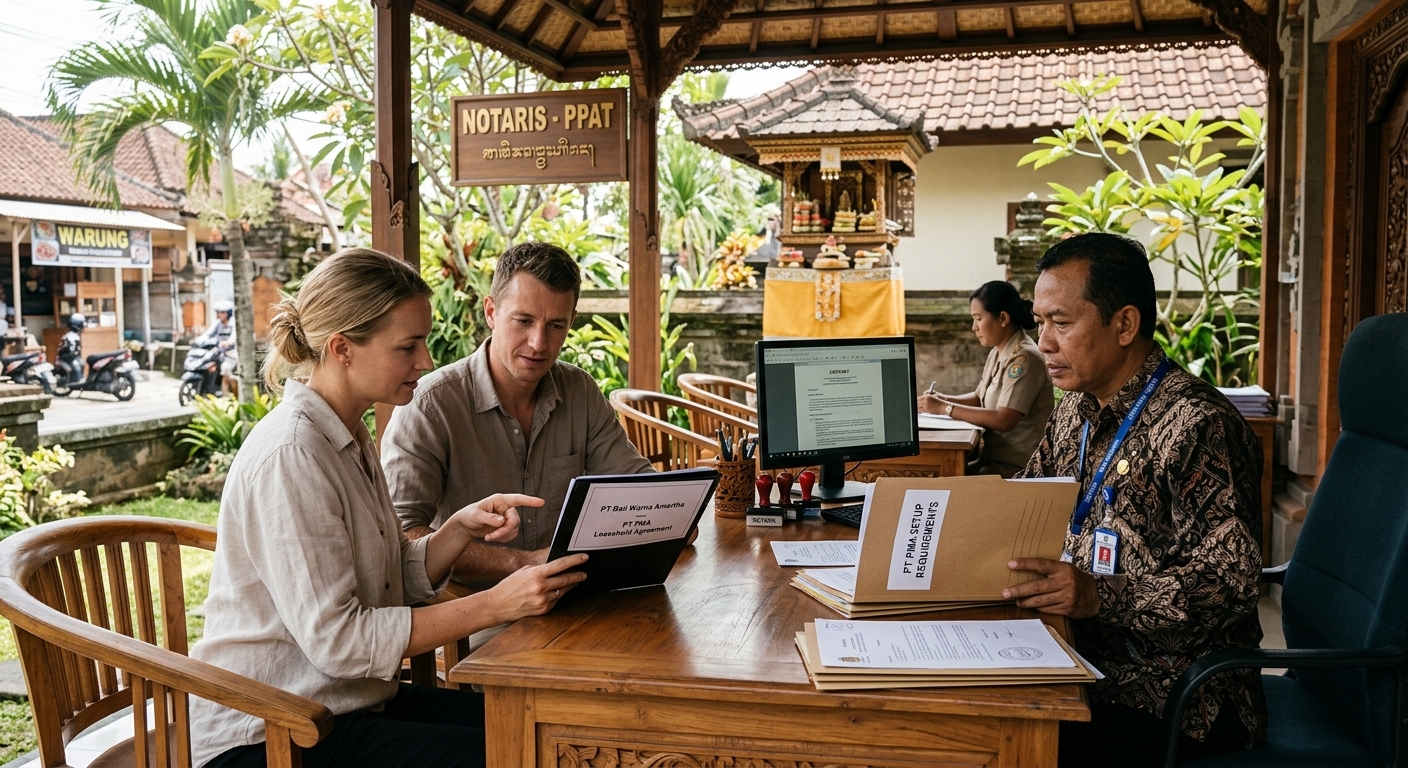
Learning how to legally buy or lease land in Bali usually starts with a simple vision. Many investors dream of a cozy loft near Canggu or a cliffside villa in Uluwatu. However, asking around quickly leads to a wall of confusing legalese, risky “nominee” schemes, and zoning headaches.
Indonesia enforces strict agrarian laws to safeguard national land. Nevertheless, many foreign investors safely build property portfolios in Bali. The secret relies on playing by the rules from day one. Below is the essential property legal playbook.
How to Legally Buy or Lease Land in Bali: Understanding Land Titles
Understanding how to legally buy or lease land in Bali starts with getting a grip on local land titles.
Under Indonesia’s Basic Agrarian Law (Law No. 5 of 1960), land rights are divided into several main categories. For foreign buyers, two titles matter most:
1. Hak Milik (Freehold Title)
▪️ What it is: This title represents full, permanent ownership with no expiry date.
▪️ Who can hold it: Only individual Indonesian citizens can legally hold freehold land.
▪️ The Common Trap: Frequently, sellers propose informal “nominee agreements,” where an Indonesian holds the freehold on paper. However, this arrangement is illegal under Indonesian law. Furthermore, courts routinely invalidate nominee deals during disputes, leaving foreign buyers with zero legal protection.
2. Hak Sewa (Leasehold Title)
▪️ What it is: This is a lease agreement granting the right to use land or buildings for a set period. Typically, lease terms run for 25 to 30 years with options to extend.
▪️ Who can hold it: Foreign individuals can legally sign lease contracts directly in their own personal names.
▪️ Typical Use: Consequently, leasehold works perfectly for residential villas, holiday homes, and boutique rental properties.
Setting Up a PT PMA for Safer Property Investment
For commercial projects such as villa rentals, hotels, F&B outlets, or real estate development, the standard structure is a foreign-owned company called a PT PMA.
Specifically, through PT PMA setup, foreign businesses can hold official land rights registered directly at Indonesia’s National Land Agency/BPN:
▪️ Hak Pakai (Right to Use): This right allows foreign individuals or a PT PMA company to hold land rights for up to 80 years total.
▪️ Hak Guna Bangunan / HGB (Right to Build): This title allows a PT PMA to construct, develop, and own buildings on land for up to 80 years total.
Using a PT PMA keeps your real estate investment fully aligned with national laws. As a result, it provides a far more defensible legal position than informal arrangements.
Why a PT PMA Cannot Own Freehold (and How Conversion Works)
Under Indonesian agrarian law, freehold is reserved exclusively for Indonesian citizens. Because a PT PMA has foreign ownership, the company cannot own freehold directly.
Therefore, when acquiring a plot currently registered under Hak Milik, the land title must undergo conversion into Hak Guna Bangunan (HGB) before the deal closes. Investors typically follow two main conversion routes:
— Direct Grant of HGB: The original owner grants HGB rights to the PT PMA through a local land notary/PPAT. Subsequently, BPN registers the new HGB title in the company’s name.
— Formal Change of Right: Alternatively, the owner applies directly to BPN to convert the freehold title into HGB using the PT PMA’s corporate documents. As a result, BPN issues a fresh HGB certificate straight to the company.
Ultimately, the PT PMA holds a recognized, fully registered right (HGB or Hak Pakai), while the underlying land ownership stays strictly within the limits of Indonesian law.
Why Setting Up PT PMA before Legally Buy or Lease Land in Bali
A common mistake foreign investors make when learning how to legally buy or lease land in Bali is searching for land and negotiating terms before incorporating their foreign company.
In practice, the safer sequence is simple:
1. Incorporate the PT PMA first.
2. Sign property agreements and complete the land transfer second.
This specific timing matters for three critical reasons:
▪️ Direct Title Ownership: The legal entity purchasing or leasing the land must be active when signing the binding sale agreement (PPJB) or deed of transfer (AJB). Therefore, the land title gets registered under the PT PMA right from the beginning.
▪️ Avoiding Extra Fees: Buying property in a personal name first and transferring it to a company later triggers double notary fees, extra taxes, and complex land reassessments. Starting with the PT PMA avoids these unnecessary costs.
▪️ Licensing Alignment: Additionally, building permits (PBG/SLF) and operational business licenses must match the exact entity holding the land rights. Having the PT PMA established early keeps all permits completely consistent.
Secure Your Property Investment with Seven Stones Indonesia
Buying or leasing land in Bali can be one of the most exciting moves in building a life or business in Indonesia. However, the process involves complex legal details.
To ensure your property investment is fully compliant with Indonesian agrarian laws, partnering with Seven Stones Indonesia for PT PMA setup and property licensing can save you from costly legal pitfalls.
Seven Stones Indonesia supports foreign investors with end-to-end services, from PT PMA setup, initial property due diligence, to drafting PPJB/AJB agreements and final registration to National Land Agency/BPN.
Reach out to our Whatsapp today to schedule a free 30-minutes consultation with our legal team.